New York’s Medical Liability Crisis: Reform Is Long Overdue
Friday, October 9, 2026

New York’s Medical Liability Crisis: Reform Is Long Overdue

Click to Enlarge
Colleagues:
New York has long faced one of the highest medical liability burdens in the country. Malpractice insurance premiums in the state routinely exceed those in much larger states such as California, Texas, and Florida, and payouts in medical liability cases are the nation’s highest.
Despite repeated calls for reform, recent legislative actions have only worsened the situation. Over the past four years, the New York State Legislature has passed measures that would have expanded the damages available in wrongful death actions without reforming the tort system. This would have increased the financial risk for physicians and increased medical liability insurance premiums by 40 percent or more, had the governor not vetoed the legislation. The current medicolegal environment disproportionately affects high-acuity specialties, including neurosurgery, anesthesiology, orthopedics, and emergency medicine, where around-the-clock availability is critical. Physicians facing soaring premiums and unpredictable legal exposure often have no choice but to reduce hospital call coverage or leave the state entirely.


Advocacy in Action

Click to Enlarge
NY County Medical Society Advocacy in Action
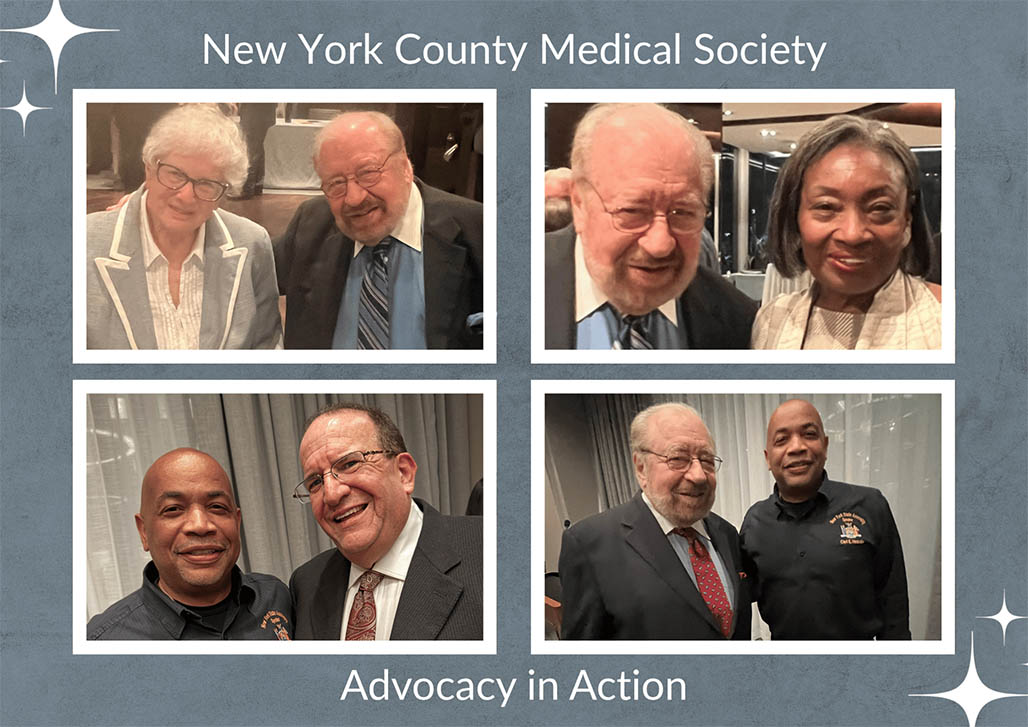
Pictured (top row, left to right): Paul N. Orloff, MD, with State Senator Toby Ann Stavisky, Chair of the Senate Committee on Higher Education; Dr. Orloff with Senate Majority Leader Andrea Stewart-Cousins. Bottom row (left to right): Scot B. Glasberg, MD, with Assembly Speaker Carl E. Heastie; Dr. Orloff with Speaker Heastie.
Dutchess County Medical Society Advocacy in Action
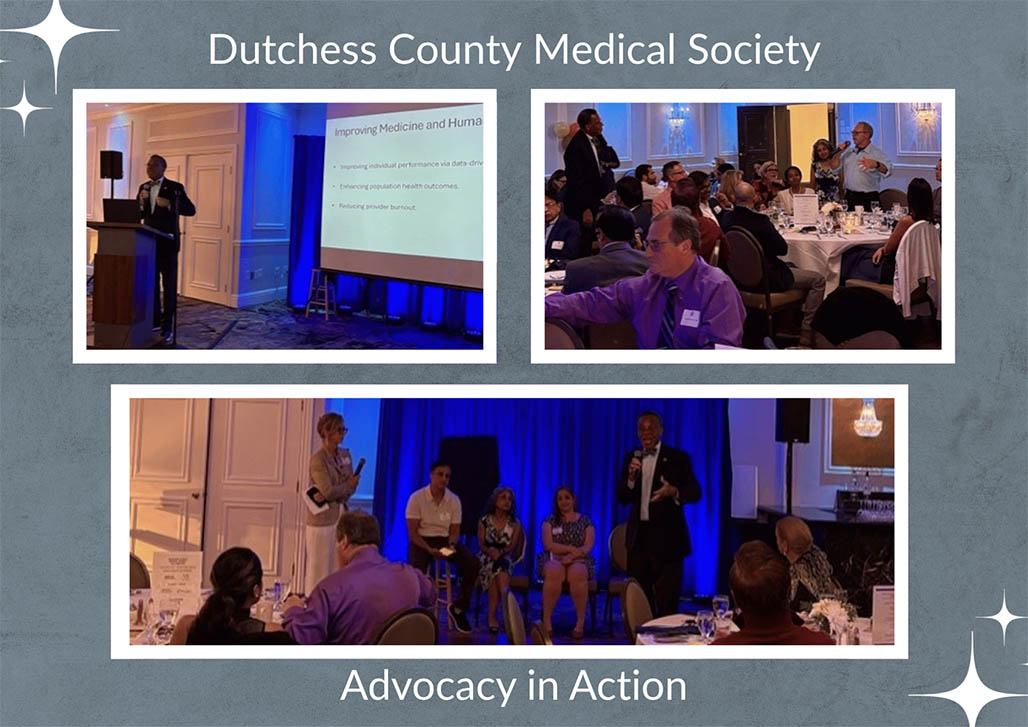
MSSNY HIT/AI Task Force Chair Donald Moore, MD, discusses the role of physicians in the era of artificial intelligence at the Dutchess County Medical Society (DCMS) Fall Meeting. MSSNY 9th District President William Barrick, MD, and DCMS leaders Rachana Tyagi, MD, and Amit Dholakia, MD, participate in an engaging discussion with Dr. Moore on the evolving role of AI in medicine.
Nassau County Medical Society Advocacy in Action
Nassau County Medical Society Fall Legislative Breakfast Recap 2026
When Physicians Step Into the Community: Grand Island Cares Shows the Power of Local Action
Click to Enlarge
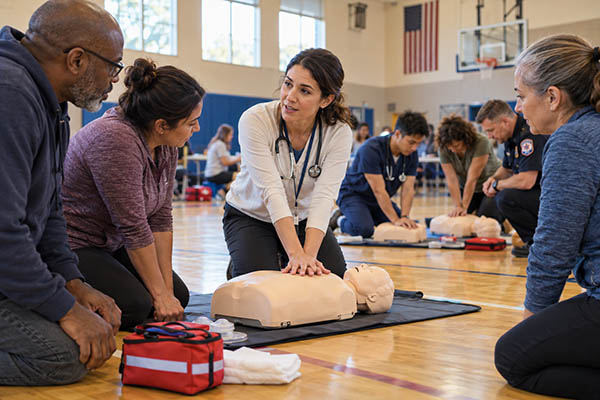
What happens when physicians, medical students, emergency responders, medical societies and community members come together with one goal—to help people know what to do when a medical emergency occurs?
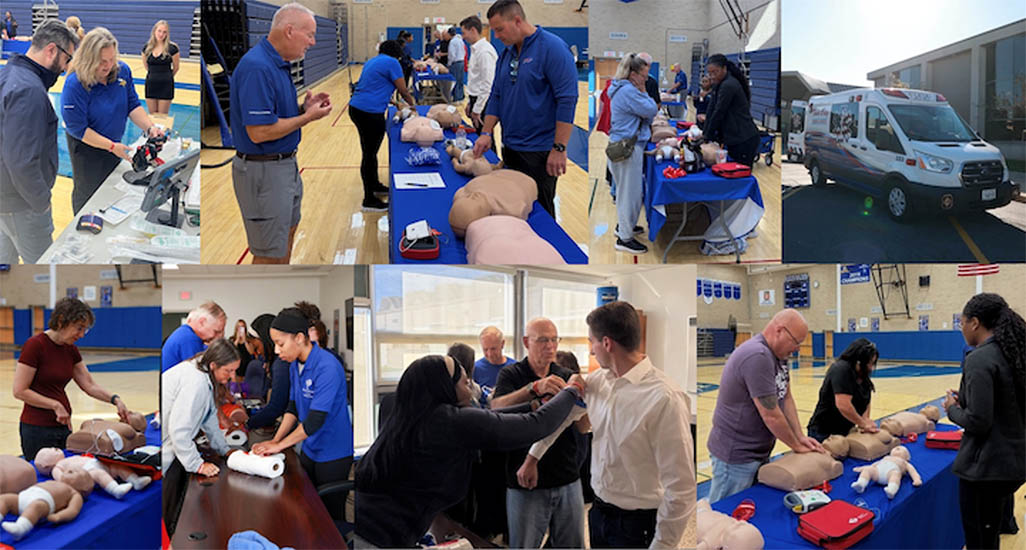
Grand Island provided an inspiring answer on September 26 with the inaugural Grand Island Cares event, bringing free, hands-on CPR, airway rescue and Stop the Bleed training to residents at Grand Island High School.
The initiative was led by Stacey Watt, MD, MBA, MHPE, FASA, MSSNY’s Eighth District Councilor and a lifelong Grand Island resident. Bringing together medical professionals, students, EMS and community organizations, Dr. Watt created an event that went beyond training. It demonstrated what physicians can accomplish when they bring their expertise directly into the communities they serve.
Preparing Neighbors to Save Lives
In an emergency, family members, friends or bystanders are often the first people on the scene. Grand Island Cares gave residents practical skills and the confidence to act while professional help is on the way.
Participants learned hands-only CPR, airway rescue and how to recognize and control life-threatening bleeding. Everyone who attended was able to receive training. Among the guests was Assemblymember Jon Rivera, who enthusiastically described the event as “the great one!”
For Dr. Watt, the response reflected the spirit of the day.
“Today was about much more than training. It was about neighbors caring for neighbors.”
The Power of Collaboration
Grand Island Cares brought together an impressive range of partners, including UBMD Orthopedics and its CPR training team, students from the University at Buffalo Jacobs School of Medicine, Dr. Iris Danziger, the Medical Society of the County of Erie, MSSNY, the New York State Society of Anesthesiologists, the American Society of Anesthesiologists, Twin City Ambulance, Catholic Health and Dr. Gregory Clabeaux.
Together, they demonstrated how collaboration can turn a local idea into a meaningful community resource.
A Model for Physicians Across New York
For MSSNY physicians, Grand Island Cares offers an example of how organized medicine can engage communities beyond traditional legislative advocacy.
Physicians have knowledge and skills that can help communities become healthier, safer and better prepared. Sharing that expertise directly with the public can also strengthen relationships among physicians, medical organizations and the communities they serve.
The model does not have to look the same everywhere. Communities could organize similar efforts around CPR, stroke recognition, opioid overdose response, emergency preparedness or other locally identified needs.
The message is simple: physicians have knowledge that can save lives, and sharing that knowledge can make communities stronger.
For Dr. Watt, the experience reflected her lifelong connection to Grand Island and her commitment to medicine and community service.
“Today was about being prepared to help someone in the moments when it matters most.”
Grand Island Cares began with a local idea, but its message can reach far beyond Grand Island. For physicians across New York, it offers a simple question worth considering: What can we teach our neighbors today that might help save a life tomorrow?
We Need Your Input!

Click to Enlarge
Physicians continue to report insurer payment delays that strain practice revenue, staffing, and administrative workflow. MSSNY is gathering input to support stronger Prompt Payment enforcement and help shape advocacy for the 2027 legislative session.
Please complete the Prompt Payment survey to share your experience with delayed insurer payments and complaint response times: https://www.surveymonkey.com/r/9WR8P6J
Then take the 2027 Legislative Survey to tell MSSNY which issues should be prioritized for New York physicians: https://www.surveymonkey.com/r/66LSXSV

AMA Foundation 2027 Programs: Scholarship Applications and Award Nominations Now Open

Click to Enlarge
The AMA Foundation would like to highlight two applications that are now open and accepting submissions.
Medical Student Society Members:
The AMA Foundation’s 2027 Physicians of Tomorrow (PoT) Scholarships cycle is open! The deadline to apply is Tuesday, January 19, 2027, at 11:59 p.m. CST.
With over 15 scholarship categories in a variety of focus areas, AMA Foundation awards scholarships to a diverse cohort of medical students each year. To apply for these $10,000 tuition assistance scholarships:
- Applicants must be in their third or final year of medical school during the 2027-28 academic year.
- Applicants must be enrolled in a U.S. accredited allopathic or osteopathic medical school program.
AMA membership or non-membership is not taken into consideration when determining recipients.
To start an application, students should visit https://amafoundation.secure-platform.com/a/solicitations/21/home.
For all society members:
Nominations for the AMA Foundation’s 2027 Excellence in Medicine Awards (EIM) are open. The deadline to nominate a deserving physician leader is Monday, January 11, 2027, at 11:59 p.m. CT.
Please note that the deadline for the Excellence in LGBTQ Health will close on Monday, November 23, 2026. Recipients will be recognized in March at the AMA Foundation’s Annual National Consortium Convening on LGBTQ Health.
Through the EIM Awards, the AMA Foundation recognizes physicians and medical advocates who exemplify the highest values of volunteerism, community engagement, leadership, and dedication to the care of underserved populations. Recipients are honored at an awards ceremony during the AMA House of Delegates Annual Meeting in Chicago in June and receive a $2,500 grant honorarium to go to a health-focused nonprofit organization of their choice.
Nominations can be started by clicking here.
For questions about either program, please contact AMA Foundation Senior Program Manager, Allison Wesel, at [email protected].
New Acute Low Back Pain Guideline and Free Resources for Physicians

Click to Enlarge
AAPM recently released a new clinical practice guideline on the assessment and treatment of acute low back pain. The guideline provides evidence-based recommendations for adults experiencing acute low back pain lasting less than six weeks that is not caused by an injury.
Along with the guideline, AAPM has developed several free resources for health care professionals and patients, including:
- A dedicated health care professional website with clinical and implementation resources
- A separate patient website with information to help people understand and manage acute low back pain
- A free, on-demand educational activity offering 1.5 CME credits

A Warm Welcome to Our New September MSSNY Members!
Click to Enlarge
We are excited to have you as part of our physician community. We’re here to support you through advocacy, resources, education, and opportunities to connect with colleagues all across New York. Thank you for joining MSSNY and helping us strengthen the profession and safeguard patient care together.
Albany County
Shaunna Leigh Escobar, MPH
Chautauqua County
Kent Alex Lieber, MD
Dutchess County
Ripjeet Chahal, MD
Erie County
Colin Marshall Anderson, MD
Christian Curatolo, MD
Benjamin Khechen, MD
John Max Leistner, MD
Sean Patrick Martin, MD
Jonathan Christopher Tyes
Nassau County
Negin Gohari, DO
Kartik Sai Pottepalem, DO
Nicholas Tzikas, MD, MPH
New York County
Rachel Alexander, MD
Meghana Karande, FAAPMR
Tiffany Martin
Vicky Prater, MD
Ami A. Shah, MD
Orange County
Michael B. Green, MD
Queens County
Sundeep Singh, MD
Hailey VanRonzelen, MD
Richmond County
Redeat Libanos Assefa, MD
Patrick Wayne Marzano, DO
Suffolk County
Marissa Nichole Catalanotto, MD
Westchester County
Shan Babeendran, DO
Renee Catherine Saenger, MD


Upcoming MSSNY Webinars Support Physicians Across Every Career Stage
Click to Enlarge
October 14
Vaccines and treatments for influenza, COVID-19, and RSV remain the most effective measures to reduce severe illness and hospitalization rates among eligible adult and pediatric patients. Additional information will be provided during the Respiratory Viruses 2026-2027 webinar, scheduled for October 14 at 7:30 AM.
October 20
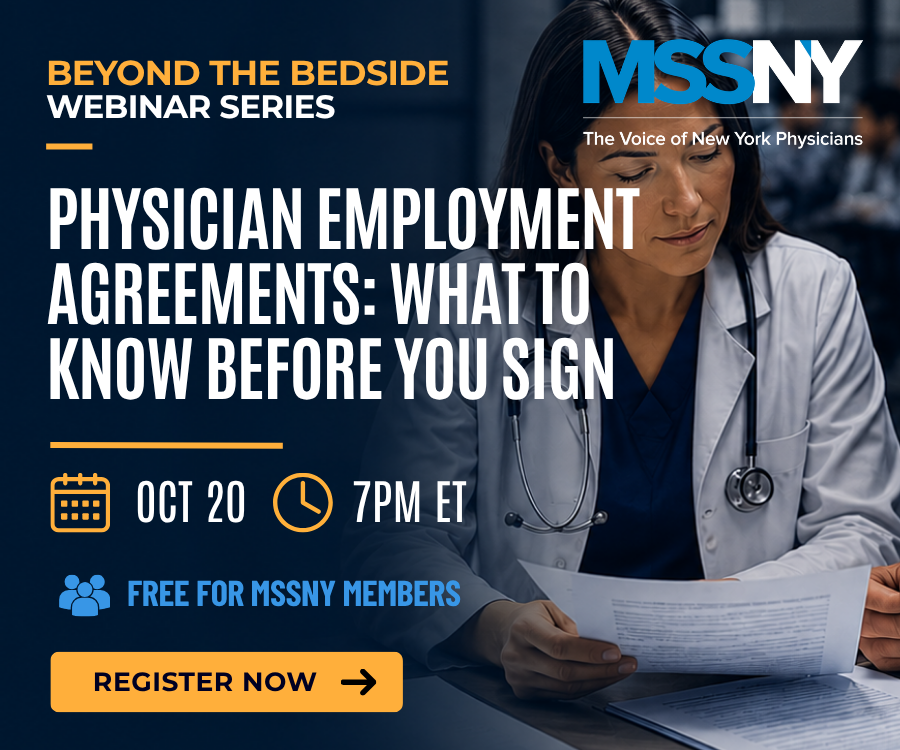
Physician Employment Agreements: What to Know Before You Sign” will address key considerations for residents and early-career physicians evaluating employment offers. Topics include compensation, wRVU targets, contract terms, termination provisions, call schedules, restrictive covenants, non-compete clauses, malpractice tail coverage, and negotiation strategies.
October 27
Beyond the Office Visit: How Chronic Care Management Can Improve Care, Quality & Revenue. Learn how Chronic Care Management and other value-based care strategies can help independent practices extend support beyond the office visit, improve patient outcomes, and create recurring revenue. Dr. Cedrick Batchateu will share practical approaches for integrating care coordination, medication management, and patient engagement into existing workflows without adding unnecessary burdens for physicians or staff.
November 4
The Art of Seeing: Art, Observation, and Physician Wellbeing. Join MSSNY to examine how art-based observation and engagement can support physician wellbeing and reflective practice.

MSSNY Tools to Help Navigate Campaign Season Noise
Click to Enlarge

Lead With Purpose, Inspire with Skill

Click to Enlarge
Expand your leadership skills ahead of 2027. MSSNY members enjoy exclusive pricing on AAPL leadership courses that prepare physicians for executive success.


Medical Space to Share Great Neck/Manhasset
Medical Office Space Available for Sublet
Office Space for Rent — Flatiron District
30 Central Park South Office Space for Lease
Professional Office Co-Ops For Sale – Rockville Centre, NY
Prime Midtown Boutique Medical Office Sublease
On Park Ave at 80 St: Large and Beautiful Office to Share
Empire State Medical, Scientific & Educational Foundation Needs Peer Reviewers