Insurers’ Refusal to Negotiate Increases Arbitration Cases
Friday, April 24, 2026

Medicare and Medicaid Reimbursement: A Broken System

Click to Enlarge
Colleagues:
For more than two decades, physicians in New York and across the country have faced a reimbursement system that is increasingly unsustainable. The Medicare Physician Fee Schedule, which serves as the foundation for physician payment, has not kept pace with inflation, rising practice costs, or the growing complexity of modern healthcare.
According to analysis by the American Medical Association, professional reimbursement for physicians has declined approximately 33% between 2001 and 2025 when adjusted for inflation. During the same period, the cost of maintaining a medical practice has continued to rise.
The result is a healthcare environment where physicians struggle to balance quality care with financial viability. Many practices, particularly independent and community-based practices, face difficult decisions: accept lower reimbursement, consolidate into larger health systems, or reduce the services they offer. Each of these outcomes has consequences for patient access and choice.
Medicare and Medicaid reimbursement policies also influence physician behavior in subtle but important ways. When payment does not adequately reflect the complexity and intensity of care, physicians may be disincentivized from taking on higher-risk patients or providing certain critical services. Physicians may leave independent practice, accelerate consolidation, or reduce services, ultimately limiting patient access to timely and effective care. This is particularly true for specialties such as surgery, anesthesiology, and emergency medicine. A fair, sustainable payment system is essential for the continued health of New York’s healthcare infrastructure.
Although reimbursement policy is largely determined at the federal level, New York physicians and organizations like MSSNY have a critical role in advocacy. MSSNY works closely with the American Medical Association and state legislators to highlight the financial pressures physicians face and to push for solutions that preserve access to care. Policy initiatives include advocating for payment structures that accurately reflect the intensity and complexity of services; encouraging stable, predictable reimbursement to support long-term planning for physician practices; and highlighting the consequences of inadequate payment on patient access and physician retention.
Reforming reimbursement is a complex challenge, but inaction carries serious consequences. The goal is straightforward: ensure that physicians in New York can continue to provide high-quality care without the constant pressure of unsustainable financial constraints. Adequate reimbursement is not simply a matter of physician livelihood, it directly affects the ability of hospitals, clinics, and community practices to maintain critical services for patients across the state.
As President of MSSNY, I remain committed to advocating for these reforms. Our goal is to create a system that compensates physicians fairly, ensures financial viability for practices of all sizes, and ultimately protects patient access to high-quality care. Physicians are the cornerstone of healthcare delivery, and their ability to practice sustainably is central to the health and well-being of our communities.
Join me in advocating for a fair reimbursement system.
All the best,
Mark J. Adams, MD, MBA, FACR
MSSNY President


MSSNY Raises Concerns on Medicaid Cuts Impacting Patient Access Across New York

Click to Enlarge
- Key Point: MSSNY leadership publicly raised concerns about the significant loss of enrollment in New York’s Essential Plan due to provisions of HR-1 during a statewide media interview, highlighting risks to patient access and healthcare workforce stability.
- Why it Matters for New York Physicians: Reduced patient insurance coverage threatens patient ability to access needed primary and specialty care services. Moreover, these cuts threaten already strained practices, particularly those serving safety-net and rural communities.
- Impact on Practice: Cuts could lead to reduced services, workforce shortages, and delayed care—placing additional pressure on physicians and healthcare teams.
- What MSSNY is Doing: MSSNY is working with policymakers, hospitals, and insurers to advocate for sustainable funding solutions and protect coverage for vulnerable populations.
In a recent televised interview on Empire State Weekly, MSSNY Executive Vice President Dr. Thomas Lee spoke candidly about the potential consequences of proposed Medicaid cuts in New York State. During the discussion, Dr. Lee emphasized that reductions in coverage in New York’s Essential Plan could significantly limit patient access to healthcare services, particularly in safety-net hospitals and community-based physician practices that care for vulnerable populations. These facilities often serve patients who rely on Medicaid or Essential Plan coverage, meaning funding changes can quickly translate into reduced services and longer wait times for care.
Dr. Lee also noted that financial strain on hospitals and physician practices may lead to workforce reductions and service cutbacks, further increasing the burden on already overstretched healthcare teams. Rural communities and urban safety-net institutions are particularly at risk, as they depend heavily on Medicaid funding to sustain operations and maintain access to care. Without thoughtful, long-term planning, funding reductions could create a ripple effect, impacting not only healthcare institutions but also the patients and communities that rely on them.
MSSNY continues working alongside policymakers, hospital leaders, and healthcare partners to advocate for responsible funding solutions that protect patient coverage and support physician practices.
Insurers’ Refusal to Negotiate Increases Arbitration Cases

Click to Enlarge
Securing fair physician reimbursement has become increasingly complex, adding yet another layer of administrative pressure to already demanding clinical responsibilities. Practices across the state continue to face delayed or inadequate payments from insurers, forcing physicians to spend valuable time resolving payment disputes rather than focusing on patient care.
In a recent article in Crain’s New York Business, MSSNY Executive Vice President Dr. Thomas Lee noted that the rise in arbitration filings reflects deeper payment challenges facing physicians across the state. According to Dr. Lee, when insurers fail to negotiate adequate payment for services delivered, physicians are often forced to turn to independent dispute resolution as the only viable pathway to recover reimbursement that supports practice operations.
Dr. Lee further noted that most physician practices are already stretched thin. Administrative capacity is limited, and physicians remain focused on what matters most: providing care to patients. As he emphasized, expecting physicians to personally manage complex arbitration processes without additional support is unrealistic, particularly when staffing shortages and regulatory burdens continue to intensify. In many cases, practices rely on specialized billing or support services to manage these disputes so physicians can continue delivering timely care. “Physicians are busy taking care of patients,” Lee said. “It’s only reasonable that they hire a billing company.”
MSSNY remains committed to supporting New York physicians facing these pressures. Through advocacy efforts, policy engagement, and strategic partnerships, MSSNY works to ensure physicians have access to resources that help manage reimbursement challenges while preserving time for patient care. These efforts reflect MSSNY’s continued role as the voice of New York physicians, working to protect the viability of practices and maintain access to care for patients statewide.
In a surprise to nobody, health insurers are seeking to flip the script, accusing physicians of flooding the state and federal IDR systems with claims. Physicians must respond to these unfair and outrageous accusations. Please urge your legislators to reject a Budget proposal that would completely upend the rules for the determination of claims brought to New York’s Independent Dispute Resolution (IDR) process for emergency care provided to patients by a non-participating physician. It would also eliminate the right of healthcare providers to even bring claims for IDR consideration related to care provided to enrollees of Medicaid Managed Care plans. These profound changes will lead to steep health insurer payment cuts, and harm patient access to urgently needed care by decreasing already limited on-call specialty care in hospital emergency departments.
The Best Way for Physicians to Evaluate Their Employment Contracts and Track Career Progress

Click to Enlarge
No matter where a physician is in their career, staying informed about the job market and latest compensation trends is essential. The landscape of physician employment changes frequently, and contract terms that were considered fair just a year or two ago may be insufficient by today’s standards. By understanding what others in their specialty and location are currently receiving, a physician can tell whether their existing terms of employment or any new offer is below average.
MSSNY member benefit provider Resolve now gives physicians more career insights than ever in their Contract Hub. The Contract Hub is a platform that allows physicians to upload all the details of their employment contract(s) and instantly see how they stack up against verified salaries, bonuses, paid time off, non-compete terms, and more from their peers. If a physician is deciding between multiple job offers, each offer or full contract can be uploaded and compared side-by-side, as well as against the data.
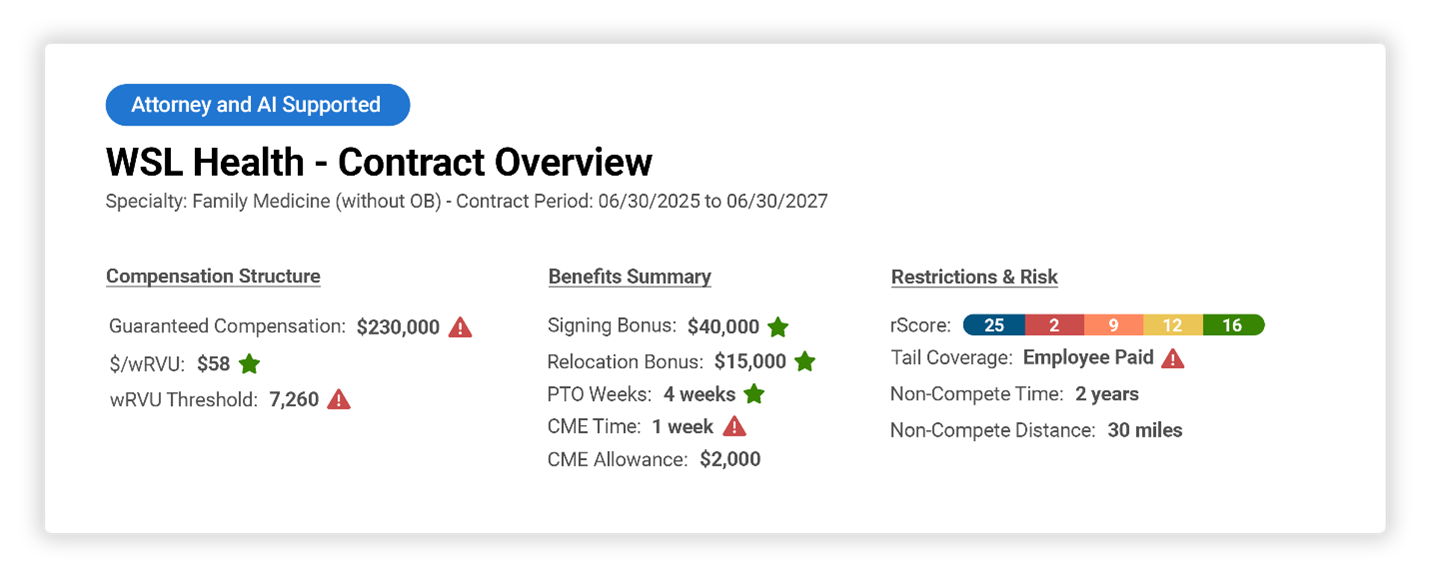
While Resolve is primarily known for reviewing and negotiating physician employment contracts, they also offer access to a large amount of data derived from thousands of those reviewed agreements. Every data point used in the Contract Hub is verified with real documents, meaning physicians don’t need to worry about the numbers being inaccurately reported.
By comparing their current or prospective contract to the latest data, physicians can easily spot inadequate compensation or terms that may negatively affect their wellbeing. These could include low salaries, unattainable production numbers, insufficient paid time off, an extremely restrictive non-compete, and more.

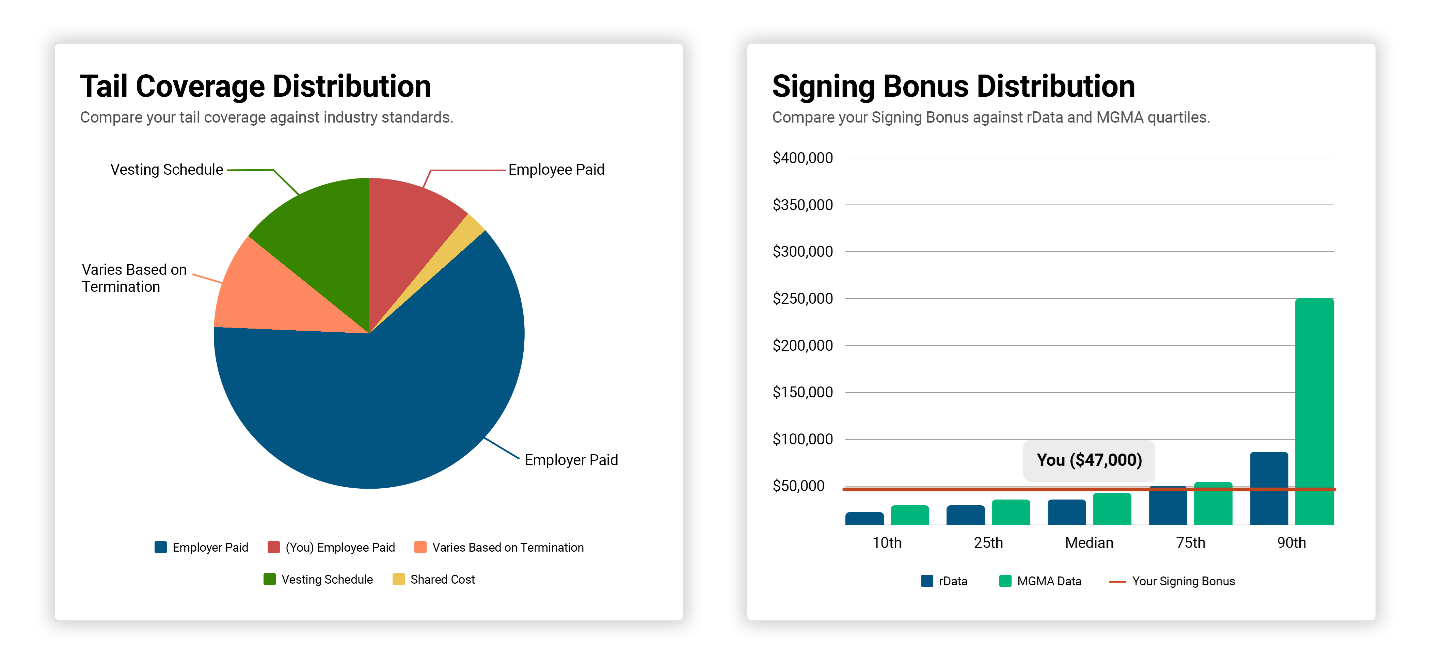
Though salary is important, it’s just one part of many modern physician compensation packages. The Contract Hub helps physicians look deeper into their compensation at production numbers and bonuses. They can also go beyond compensation entirely and see breakdowns of malpractice tail coverage and other benefits that have an associated cost.
To help visualize how terms stack up and identify areas that need improvement, the key terms of a contract are displayed in detailed charts and graphs.
The Contract Hub is designed for all physicians, no matter the specialty, career stage, or individual goals. By leveraging the most accurate, up-to-date contract data, physicians have all the market insights they need to make confident career decisions.
Creating an account at resolve.com gives MSSNY members immediate access to the Contract Hub. All the aforementioned features are free to use, but if physicians would like access to additional data sources, like MGMA, or hands-on contract review and negotiation assistance, MSSNY members receive 10% off any paid Resolve services.


Capital Update April 24, 2026

Click to Enlarge

MSSNY Immediate Past President Dr. Jakubowicz Shares Advocacy Expertise at SUNY Downstate Grand Rounds
Click to Enlarge
Policy changes, reimbursement challenges, and increasing administrative complexity continue to shape how physicians deliver care and sustain their practices. That reality underscores the importance of physician leadership in advocacy and education. MSSNY Immediate Past President David M. Jakubowicz, MD, FACS, FAAOHNS, FAAOA, recently brought that leadership to the forefront during a Grand Rounds presentation at SUNY Downstate Health Sciences University’s Department of Surgery. His presentation, Healthcare Legislation and Physician Advocacy, provided physicians with a practical overview of how legislative developments influence clinical practice, patient access, and physician autonomy. Sessions like this are critical as physicians navigate a healthcare landscape increasingly shaped by regulatory and legislative action at both the state and federal levels.
Through his work as Immediate Past President of MSSNY, Dr. Jakubowicz has remained deeply engaged in strengthening physician advocacy and ensuring that the physician voice is represented where decisions are made. His presentation highlighted how physician involvement in advocacy directly impacts issues such as reimbursement stability, scope of practice protections, and reducing administrative barriers that limit patient care. By sharing real-world policy insights, he helped equip physicians with the knowledge needed to respond to emerging challenges and advocate effectively on behalf of their patients and practices.
Watch the presentation in its entirety. Use passcode f6i8A3.w.



Legal Expertise for New York Physicians

Click to Enlarge
Legal issues can emerge at any time. Norris McLaughlin offers MSSNY members a one-hour complimentary consultation and discounted rates on compliance, contracts, and practice law.