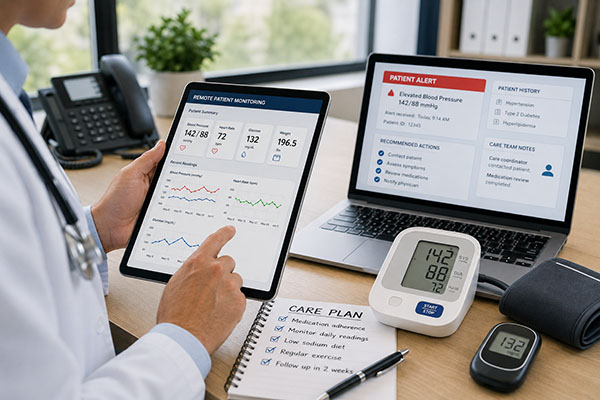
findings directly to the treating physician, who was able to make timely clinical decisions based on current information rather than waiting for the next office visit.
While no one can say with certainty what would have happened otherwise, early intervention may have reduced the patient’s risk of a serious cardiovascular event. This illustrates the true value of RPM—not simply collecting data but turning it into timely clinical action.
Moving from Reactive to Proactive Care
Traditional healthcare is often reactive, treating complications after they occur. RPM enables practices to become proactive by identifying concerning trends before they become emergencies. Combined with Chronic Care Management (CCM), physicians gain continuous oversight of their highest-risk patients without adding significant burden to their schedules.
When implemented through an experienced clinical partner, pharmacists, nurses, and care coordinators can monitor physiologic data, contact patients when abnormal readings occur, perform medication reconciliation, reinforce treatment plans, coordinate follow-up care, escalate significant findings to providers, and document CMS-compliant services. Physicians remain in control of all medical decision-making while benefiting from an expanded care team.
Improving Quality While Supporting Financial Sustainability
Beyond improving patient care, CCM and RPM support better chronic disease control, earlier identification of clinical deterioration, improved medication adherence and patient engagement, fewer avoidable emergency department visits and hospitalizations, stronger quality performance, and appropriate Medicare reimbursement for care coordination services.
As healthcare continues shifting toward value-based care, programs that improve outcomes while supporting financial sustainability are becoming increasingly important.
Looking Ahead
Technology alone does not improve outcomes—the clinical response does. Every elevated blood pressure reading, abnormal glucose value, or concerning weight gain represents an opportunity to intervene before a preventable complication occurs.
For physicians caring for patients with chronic disease, CCM and RPM are no longer simply reimbursement programs. They are powerful clinical tools that extend care beyond the walls of the practice, enabling continuous, proactive care that improves the health and lives of patients.