Behind the Mask: Dr. Brian White on Discipline, Medicine, and Returning to Elite Competition
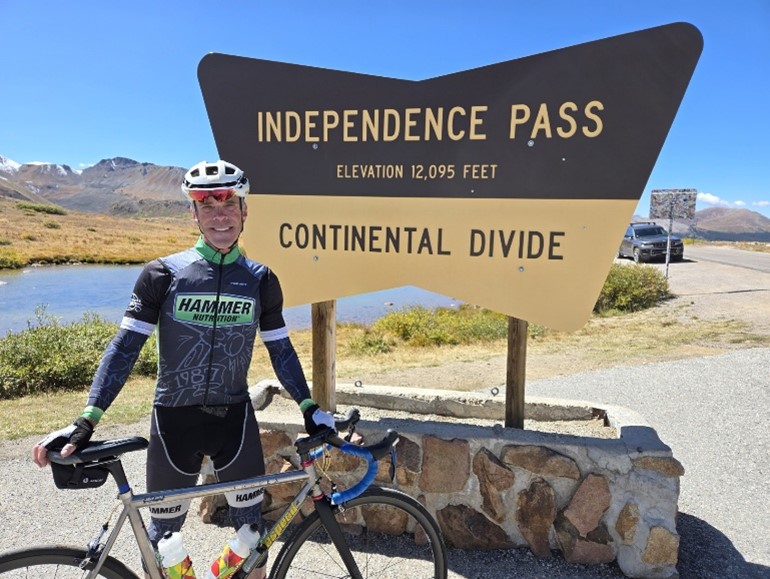
Click to Enlarge
For New York physicians navigating demanding clinical schedules, leadership responsibilities, and the long arc of a medical career, personal passions are often placed on hold. Training years, early practice, and family commitments can quietly push aside pursuits that once defined identity and balance. Many physicians recognize this tradeoff and wonder if, or when, there is space to return.
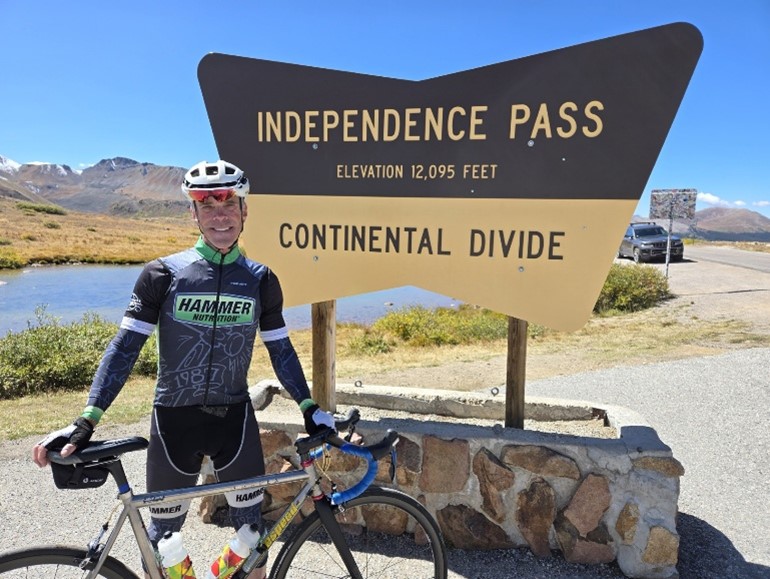
That experience resonates deeply with Brian F. White, DO, a MSSNY member since 2009 and Chief of the Interventional Pain Division at Bassett Healthcare Network. A specialist in interventional pain management, Dr. White also serves as an Associate Professor at Columbia University and teaches internationally through the International Pain and Spine Intervention Society (IPSIS). Alongside his medical leadership, he has reestablished himself as an elite Master’s cyclist, competing at the highest levels after a 22-year hiatus.
Dr. White stepped away from competitive cycling in 2001 when he entered medical school. Like many physicians, the decision was not about losing interest, but about prioritizing what the moment required: education, training, building a career, and supporting family. Medicine demanded full attention, and cycling became something set aside rather than abandoned.
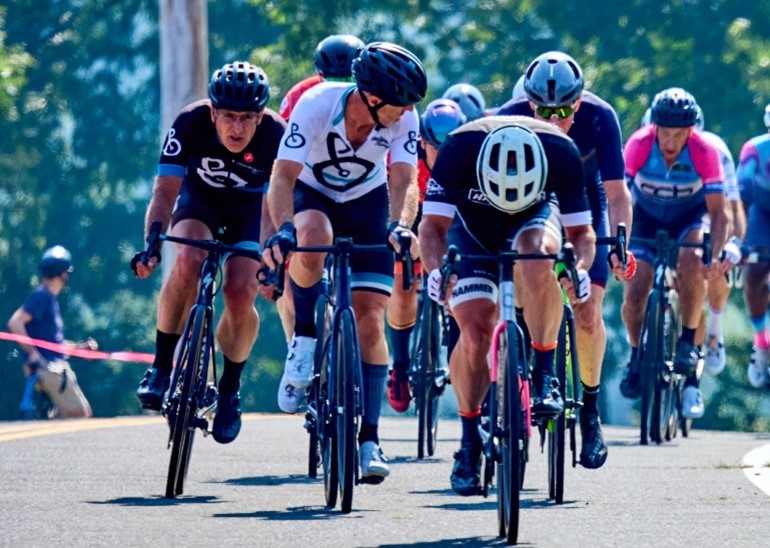
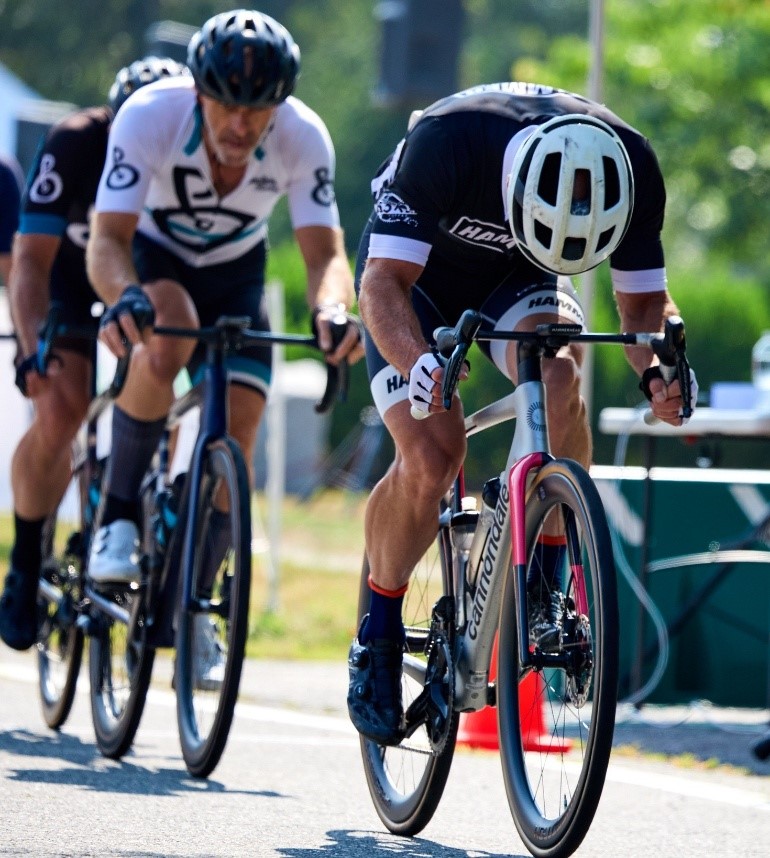
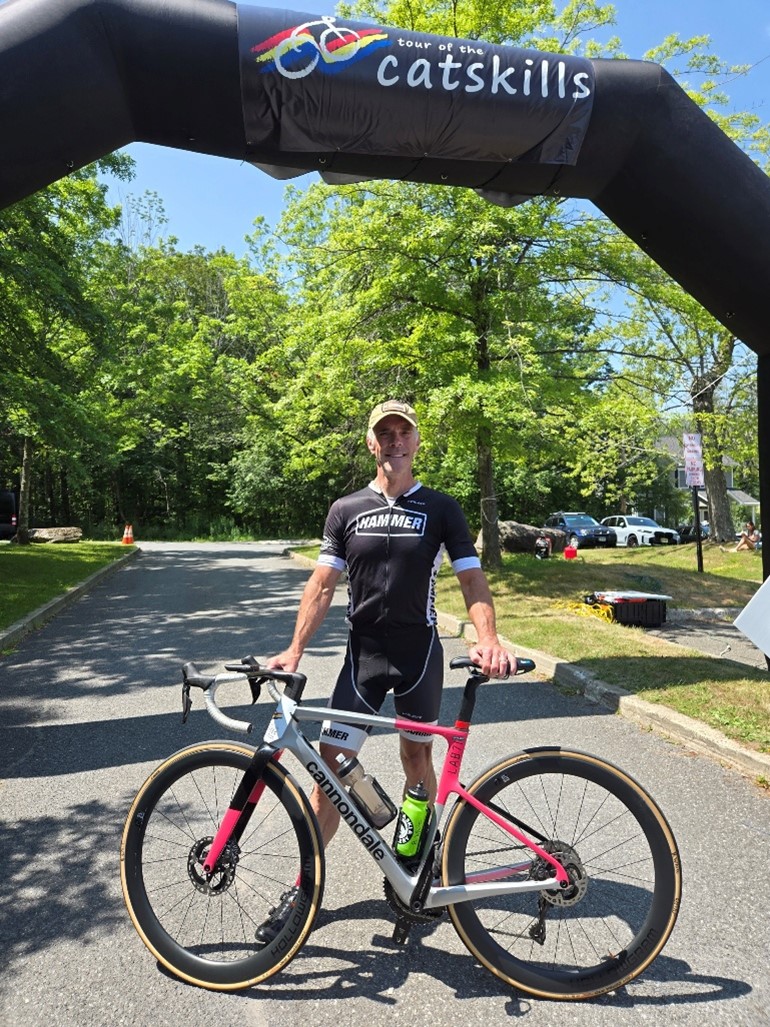
More than two decades later, in 2023, Dr. White returned to racing, initially as a test of whether the discipline, focus, and identity forged earlier in life still existed. The answer was immediate. By the 2025 season, racing with Hammer Masters, he competed in 24 events, earning four wins, ten podium finishes, and eighteen top ten results, including a bronze medal at the U.S. Masters National Championships. His season included victories at the Tour of the Catskills, Hamburg Road Race, and Lime Rock Grand Prix.
For Dr. White, cycling is not separate from medicine; it is an extension of it. Training after long clinic days, rising early for workouts, and committing to incremental improvement mirror the habits physicians rely on to sustain excellence in practice. As he notes, “Take ownership of your life and your process, be responsible for your pathway. In medical school and training, we all had to take ownership of our process and our efforts to achieve our goals. This is very similar to the athletic process.”
Importantly, Dr. White also emphasizes that sustained performance is never an individual effort. Support from family, colleagues, and teammates has been essential to balancing leadership in medicine with elite competition. “My family has been very supportive. To do my clinical work and my work as department chief, and to train and compete in addition to this, requires a shift of time, and often that shift necessitates that many items on the ‘Honey-Do list” don’t get done; I am not very diligent about cutting my grass, completing home improvement projects, or cleaning my home office. I thank my family for their understanding of this reality.” This shared purpose reflects the reality of medical practice itself: physicians do not work in isolation, and longevity depends on community as much as individual discipline.
MSSNY is proud to spotlight physicians like Dr. White, whose journeys reflect the whole reality of physician life in New York: commitment, sacrifice, renewal, and growth across decades of practice. His story is not about returning to the past, but about carrying forward the values forged through medicine into every aspect of life. In amplifying stories like these, MSSNY continues its role as The Voice of New York Physicians and welcomes members interested in being featured to connect with us.
In the Q&A that follows, Dr. White reflects candidly on stepping away from a passion, finding the right moment to return, and what physicians can learn about longevity from both medicine and sport. His perspective invites fellow New York physicians to consider not only how they practice medicine, but how they sustain themselves along the way.
What Physicians Want to Know
Five questions for Brian F. White, DO, on medicine, longevity, and sustaining purpose
If you could speak directly to a physician who feels they’ve lost part of themselves to training and work, what would you tell them?
Make the effort to engage your whole life, take the time to pursue passions beyond Medicine that help you to be a more complete person, and don’t be afraid to be a little bit ‘selfish.’ It is challenging to bring our best to our relationships with our families, patients, or colleagues when we feel an internal longing, a sense of incompleteness, or a sense that we are missing something. Allow yourself the ‘extravagance’ of doing something for yourself. By doing so, you will help to find a fullness in your life that will let you bring more to your relationships with those around you. Do your best with patient care and family life and carve out some regular space for yourself.
Like many physicians, you stepped away from a personal passion during medical school and early practice—how did you know when it was the right time to return?
My return to competitive cycling was serendipitous. I had no plans to return to racing. However, in 2023, the NY state time trial championship was in my town. As someone who had some standing in the cycling community at one time, I thought it was important to support the local event by participating. My initial goal was to not embarrass myself, although unexpectedly, winning that event was really great.
Physicians often tell patients to prioritize their health, while struggling to do so themselves. How has returning to elite cycling changed how you show up for patients?
Personal choices about behavior, diet, exercise, and self-care are the real drivers of the demand for healthcare and thus the big drivers behind healthcare costs. I spent a lot of energy working on my weight, counting calories, fitting in training after work, and so on. I do this for personal satisfaction, but also to set an example for my patients, my family, and my community. If I can find the time to watch my eating and fit in my training while running a department and having a family, then those around me can do the same. I have a busy life, but I work to make it happen; others can do the same. I hope that by example, I am paving the way towards better health.
Medicine trains you to delay gratification for years. How did that mindset help or hinder you when returning to elite competition later in life?
Competition is one of the ultimate exercises in delay of gratification. National championship races are in July, but to be competitive, I need to work on getting my weight down now, build my aerobic base for the season, and lift weights to improve my strength and minimize injury risk. I am currently recovering from a bad accident in September and working through that is part of the process.
After a 22-year hiatus, what surprised you most about your physical or mental capacity, and what does that mean for physicians thinking about longevity in practice?
If we work very hard and prioritize taking good care of ourselves, we can really slow the decline of aging. That said, we cannot beat Father Time. I would say that my VO2 and wattage output are likely 20% or so below where they were in my late 20s. On the one hand, this is normal and to be expected, and, of course, disappointing. It would be great to have the same power and recovery capacity I had 30 years ago, but I do not. However, the silver lining is that with discipline and hard work, I am able to perform at a high level. I think that this is where the message and the lesson lie. If we work hard to care for ourselves, eat well, eat less, sleep well, don’t drink alcohol, get regular aerobic and resistance exercise, develop good and meaningful relationships, then we can continue to perform at a high level well past where we once thought that we could, 70’s, 80’s, who knows? But you need to commit to taking personal responsibility for your process and optimizing both your health and function.