The Collective Physician Voice Can Shape History
Friday, December 19, 2025

The Collective Physician Voice Can Shape History
Click to Enlarge
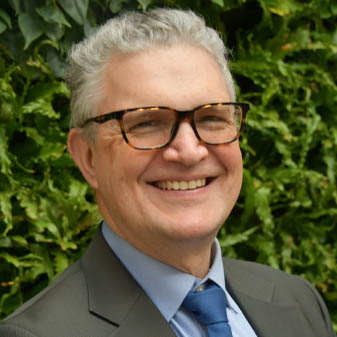
Colleagues:
On Dec 17, New York State announced that a deal had been struck that would make it the 13th State to allow Medical Aid in Dying. New York is the first state in which the respective state Medical Society was in support of the legislation at the time of its passage. This stance by your medical society assured those who object to this law—be it individual physician or institution—would play no role in these decisions by the patient. There are significant safeguards to the patient, including the requirement that two physicians and a mental health professional provide an assessment that the patient is capable of making the decision and has less than 6 months to live; and there is a waiting period before the requested aid is rendered.
When I attended the Governor’s press conference, I received tremendous appreciation from the patients, their families and loved ones, the advocates and the politicians for the brave position MSSNY took on this matter. Prior to this, I also received criticism by some for the decision of our House of Delegates (HOD) over two years ago. The HOD’s decision put us at the table, crafting the best law forward that respected all parties involved—including those who fundamentally object to it.
For those still critical of the position of our HOD, the question on this legislation was not if it would be enacted, but when. MSSNY was then able to shape the who and how to exclude anyone who objects and protect anyone from its inappropriate use and make sure sufficient safeguards exist. The why is obvious—we live in a democracy and both the electorate and our HOD spoke their will and we need to respect the wishes of the majority while protecting the rights of the minority. This legislation accomplishes that because of MSSNY’s input.
The personal stories of unnecessary and preventable grief and suffering prior to death and the simple ask by some to allow for some dignity and choice for the inevitable created a very moving experience for those in attendance.
This stance was supported by our colleagues at the New York State Academy of Family Physicians and the New York State Psychiatric Association. The legislative champions of Assemblywoman Amy Paulin and Senator Hoylman-Sigal are to be commended for their drive and dedication, and Governor Hochul for her thoughtful chapter amendments.
On December 17, your MSSNY was seen by those in the room as a brave partner to this landmark legislation and was thanked and respected by all those in attendance.
We understand that many of our members have genuine and differing opinions on this and other issues; however, let’s remember that we do agree on the majority of important issues and priorities for the practice of medicine. As we approach the upcoming fiscally challenging state budget, we need to all pull together in friendship and support to achieve the legislative priorities so important to New York physicians. Hopefully our collaboration with the legislators on this bill will help us achieve these goals.
Remember your voice—the collective physician voice—can shape history.
Thank you.
All the best,
David Jakubowicz, MD, FACS
MSSNY President

Merry Christmas and Happy Kwanzaa to Those Who Celebrate!

Click to Enlarge
As Christmas and Kwanzaa are celebrated, MSSNY is grateful for the dedication, resilience, and humanity that define New York physicians. These holidays offer time to reflect on themes that resonate deeply within medicine—service, compassion, renewal, unity, and purpose. Whether through faith, family traditions, or cultural reflection, these moments matter.

HEALR Program Opens: Loan Repayment Support for New York Physicians Serving High-Need Communities

Click to Enlarge
- Key Point / Outcome: New York State has opened applications for the HEALR Program, a $48.3 million Medicaid workforce initiative offering substantial loan repayment.
- Why It Matters: Student debt continues to influence practice decisions for many New York physicians, particularly those serving high-need populations.
- Impact on Practice: Awardees commit to four years of full-time service in practices or organizations serving at least 30% Medicaid and/or uninsured patients.
- MSSNY Support: MSSNY is amplifying awareness so eligible physicians can take advantage of this state investment in the workforce.
- CTA: Review eligibility and apply at health.ny.gov/HEALRProgram.
For New York physicians balancing patient care, administrative demands, and the lasting weight of student loan debt, financial pressures often shape where and how long physicians are able to practice. These realities are especially acute for those serving Medicaid and uninsured populations—communities that rely heavily on physician commitment and continuity of care.
The New York State Department of Health’s Office of Health Insurance Programs has opened applications for the Healthcare Access Loan Repayment (HEALR) Program, a $48.3 million initiative authorized under the state’s 1115 Demonstration Waiver. The program is designed to attract and retain physicians and other healthcare professionals in high-need roles by offering substantial student loan repayment assistance.
Under HEALR, eligible award amounts include up to $300,000 for psychiatrists, up to $100,000 for primary care physicians and dentists, and up to $50,000 for nurse practitioners and pediatric clinical nurse specialists. In exchange, awardees commit to four years of full-time service while maintaining a qualifying personal practice panel or working at an organization that serves at least 30 percent Medicaid members and/or uninsured individuals. Practices contracted with state-designated Social Care Networks that provide health-related social needs screening and services also qualify.
Physicians may apply individually, or employers approved as service commitment sites may initiate up to five applications on behalf of their staff. Employer applications are due January 31, 2026, and individual applications are due February 15, 2026, with awards announced in late spring 2026. Learn more and apply at health.ny.gov/HEALRProgram
Behind the Mask: Dr. Hemant Kalia on Presence, Purpose, and the Practice of Medicine

Click to Enlarge
For physicians, medicine rarely stops at the exam room door. The mental preparation, emotional regulation, and quiet rituals that sustain often happen long before you see your first patient, and long after you leave the hospital or clinic. Many of your colleagues rely on small, personal routines to stay grounded amid the pace and pressure of practice.
Dr. Hemant Kalia, founder of Savya Neuroscience Institute, is no exception. His day often begins with coffee, a moment of reflection from the Bhagavad Gita, and music that helps him settle into focus before the OR. These habits are not indulgences; they are tools that allow him to be fully present for patients and his care team.
Before reviewing cases, Dr. Kalia checks in with his staff to identify urgent patient concerns and mentally prepares for the unique needs of the day ahead. Like many physicians, he understands that clinical excellence depends not only on technical skills but on communication, trust, and team alignment. Technology plays a role as well, with AI-powered ambient listening tools supporting efficiency while allowing greater attention to the human side of care.
Outside of medicine, music, family, and reflection continue to anchor him. Whether unwinding with a record, enjoying a beverage, or spending time with his five-year-old, these moments restore the clarity required for complex decision-making. His interests, ranging from Indian classical music to ancient surgical philosophy, reflect a belief that innovation and tradition are deeply connected.
In his SpineLine Q&A, Dr. Kalia shares the personal details behind the white coat: the routines, influences, and reflections that shape how he practices medicine and lives his life. His answers will feel familiar to many New York physicians, because behind every title and specialty is a colleague navigating the same balance between responsibility, purpose, and presence.
MSSNY Resident and Fellow Section Dinner and Discussion Recap

Click to Enlarge
The MSSNY Resident and Fellow Section recently hosted a dinner and discussion with colleagues from Ceribell, the company behind the FDA-cleared point-of-care EEG system designed for rapid bedside detection of status epilepticus. Ceribell’s device offers a lightweight, easily applied headband EEG that enables fast seizure detection and immediate clinical action.
The evening was both educational and genuinely fun. The team had the chance to explore Ceribell’s workflow firsthand and see how point-of-care EEG can fill critical gaps in acute neurologic care even across New York hospitals.
We also used the opportunity to revisit advocacy, including an excellent session from Dr. Charles Lopresto on how organized medicine actually moves. He walked us through how a simple resolution, even from one resident, can climb all the way up the ladder to Capitol Hill.
The dinner naturally turned into a research forum as well, with brainstorming potential collaborations focused on rapid seizure detection beyond inpatient settings, including possible applications in long-term care facilities. While policy shapes advocacy, research clearly has its own role in driving advocacy within MSSNY. In an era defined by AI and virtual technology, these in-person events are essential to strengthen physician connections, allowing us to rub elbows with innovative professionals who can make the change in the field.
Overall, it was an engaging and productive event that strengthened relationships between MSSNY RFS members and industry innovators, helping lay a framework for future advocacy and research growth together.
–Karim Makhoul, MD – MSSNY Resident/Fellow Section Chair


Assembly & Senate Pass Legislation to Protect Healthcare Workers in Emergency Settings

Click to Enlarge
Governor Hochul has signed into law legislation (A.203-B, Cruz/S.5294-B, Sepulveda) supported by MSSNY and the New York American College of Emergency Physicians to require hospitals to develop a violence prevention program including the establishment of security personnel in hospital emergency departments to protect physicians, nurses, and hospital staff who provide critical medical care in such emergency departments from violent verbal and physical abuse. The MSSNY House of Delegates has adopted Policy 315.985 that calls for MSSNY to “advocate for development of appropriate minimal facility security standards for all New York State licensed hospitals by a broad based professional advisory panel.”
Violence against healthcare workers has long been a problem, but there has been a dramatic increase in intimidation, threats and attacks toward physicians and other health professionals over the last decade, becoming even more prevalent during the COVID-19 pandemic. According to the American Medical Association (AMA), between 2011 and 2018, violent attacks against medical professionals grew by 67% with health professionals five times more likely to experience workplace violence than workers in all industries. Healthcare professionals were also 50% more likely than other community members to have been harassed, bullied or hurt because of the COVID-19 pandemic. Moreover, according to surveys by the American College of Emergency Physicians (ACEP) and the Emergency Nurses Association (ENA), almost half of emergency medicine physicians report being physically assaulted at work, while about 70% of emergency nurses report being hit and kicked while on the job.
New NYSDOH Rules Strengthen Physician and Community Input in Hospital Closure Decisions

Click to Enlarge
At its 2021 House of Delegates, MSSNY adopted policy (150.959) urging that there be meaningful local physician and patient input into proposals to close, downsize or re-purpose hospitals that could adversely impact health care options in communities served by those hospitals, including public hearings in communities affected by the closure.
Through a December 1 Dear Administrator Letter, the NYS Department of Health has significantly enhanced the notification requirements when a hospital, diagnostic and treatment center, end-stage renal disease facility, or ambulatory surgery center seeks to close. The letter was advanced by the NYSDOH as the Governor is again considering legislation passed by the Assembly and Senate earlier this year A.6004/S.1226 – vetoed last year – that would set forth strict notification and community input requirements when a hospital seeks to close or re-structure.
The DOH Letter differentiates notification requirements for temporary closures and those lasting longer than 60 days. For a permanent closure or one lasting longer than 60 days, the letter requires the facility to inform the public, physicians, staff, unions, and elected officials of its intent to close. The closure plan must also describe how patients, including those covered by Medicaid, will continue to receive care, including information on alternative facilities and assurances of language access. The closure plan must also demonstrate that it has coordinated with other providers and that legitimate patient concerns such as geographic location, public transportation, type of facility, medical care, etc., are being addressed in identifying future placement options to ensure continuity of care for patients.
Importantly, the letter sets forth a requirement for a public meeting to occur with 10 days’ notice, to discuss the closure and obtain feedback from the affected community. The public meeting must occur within reasonable proximity to the facility or unit seeking to close and is accessible to individuals with disabilities, with a virtual option to participate being provided.
New SCPA Signature for RHIO Participants Required by March 31, 2026

Click to Enlarge
New York State recently approved the Statewide Common Participation Agreement (SCPA), a new, common legal framework for all health care entities that participate in the Statewide Health Information Network (SHIN-NY). It establishes a data sharing agreement to make the state’s health information exchange more efficient, more robust, and more valuable to New York’s healthcare community. The approved SCPA will replace the numerous, different legal agreements which have historically governed participation in the SHIN-NY through the participating organization’s RHIO. The SHIN-NY currently connects all hospitals in New York State, is used by well over 100,000 healthcare and community-based professionals, and supports the care of millions of people who live in or receive care in New York.
The State’s New York e-Health Collaborative (NYeC) reminds physicians participating with their local RHIOs to execute their new SCPA form by March 31, 2026, in order to keep sharing and receiving information from their RHIO and SHIN-NY. Participation with the SHIN-NY is not required for physicians, but for those who do, the new agreement is required to be completed. For more information, you can review the FAQ here: FAQs-on-SCPA-Release_09.22.25.pdf
Physician Advocacy in Action

Click to Enlarge
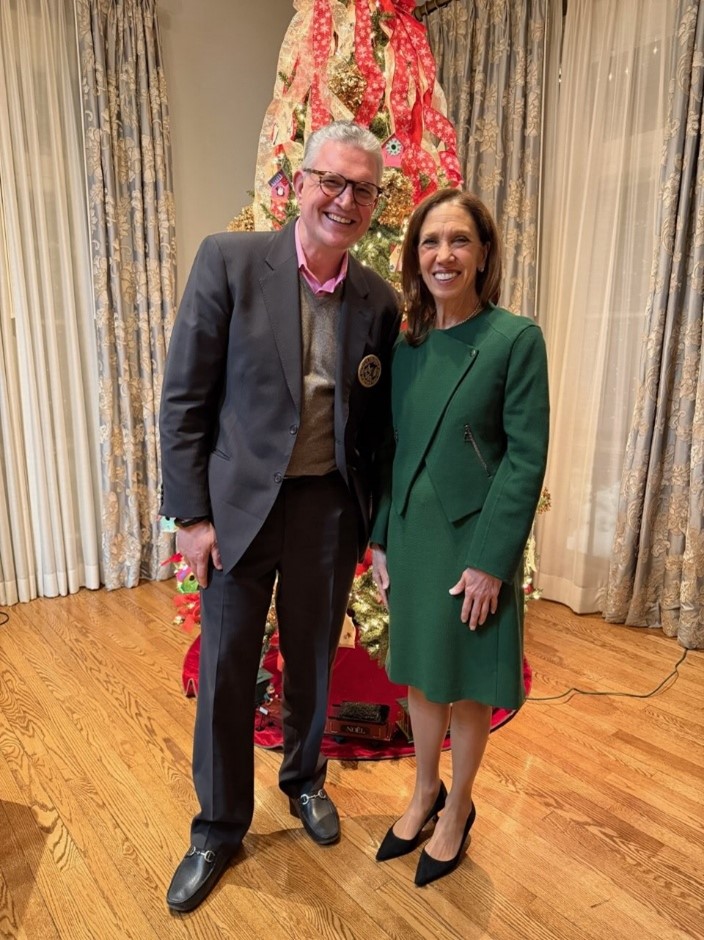
MSSNY President Dr. Jakubowicz with Assembly member Amy Paulin (D–Westchester), Chair of the Assembly Committee on Health, at a recent political event in Westchester.
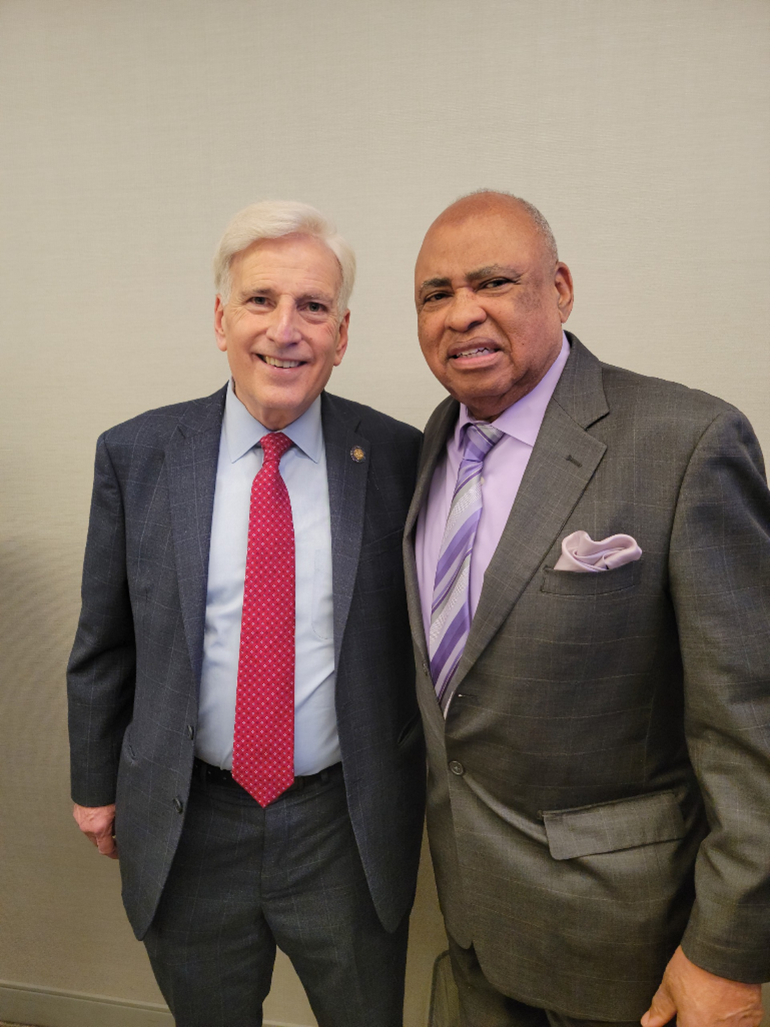
MSSNY Vice-President Dr. James E. Satterfield attended an event honoring Assemblymember David I. Weprin (District 24/Queens). Assemblymember Weprin is Chair of the NYS Assembly Committee on Insurance, a member of the Committee on Ways and Means, and the Committee on Codes.

The January 2026 Medicare Fee Schedule is Now Available

Click to Enlarge
To get your copy, please email Heather Lopez in the Physician Payment and Practice division, [email protected]

Earn CME: Neuroscience of a Bucket List
Click to Enlarge
Physician burnout rates have decreased, but job stress for physicians has increased. Creating intentional, future-oriented goals and incorporating these into daily and weekly routines can improve well-being and decrease job stress. Learn more by registering for Neuroscience of a Bucket List on Tuesday, January 13th at 7:30 a.m. Jeffry DeSarbo, DO, neuropsychiatrist and author of the book “Neuroscience of a Bucket List”, will serve as faculty for this webinar. Register now.
Beyond the Basics: Tailoring Emergency Preparedness for Special Populations. Register Now!

Click to Enlarge
Emergency preparedness can be unique for every individual, family and organization. Adding in other considerations for special populations must also be included in plans for every type of emergency. Learn more about ways to prepare special populations for emergencies by registering for the next Medical Matters webinar, Beyond the Basics: Tailoring Emergency Preparedness for Special Populations on Wednesday January 21st at 7:30a.m. Alex Mikowski, Executive Director of Access to Independence, Cortland, will serve as faculty for this webinar. Register now.
Educational Objectives:
- Identify and articulate unique risk factors during a disaster scenario for distinct special populations from the perspective of a person with disabilities
- Formulate a structured plan to initiate and maintain collaborative partnerships community-based organizations (e.g., Independent Living Centers, disability advocacy groups, or specific population networks) that represent and serve individuals with access and functional needs, to integrate their insights into local emergency planning documents
- Appraise the modifications required for standard sheltering-in-place or evacuation procedures to meet the specific needs of patients with functional needs, based on current guidelines (e.g., ADA, FEMA)
- Evaluate the clinical and ethical considerations inherent in resource allocation (e.g., medications, assistive technology) for vulnerable populations during a mass casualty incident or public health emergency
Additional information or assistance with registration may be obtained by contacting Melissa Hoffman at [email protected]
Accreditation Statement:
The Medical Society of the State of New York is accredited by the Accreditation Council for Continuing Medical Education (ACCME) to provide continuing medical education for physicians.
The Medical Society of the State of New York designates each live activity for a maximum of 1.0 AMA PRA Category 1 Credits TM. Physicians should claim only the credit commensurate with the extent of their participation in the activity.
*This program is supported in whole by a DHHS grant entitled New York State Hospital Preparedness Program

Celebrate The Holidays—Member Style

Click to Enlarge
Treat yourself to Broadway, travel, or dining discounts through MemberDeals, exclusive to MSSNY members.