Contract Mistakes Physicians Should Avoid
Friday, March 20, 2026

MSSNY president: IDR system crucial for fair payment resolutions

Click to Enlarge
Dr. David Jakubowicz, president of the Medical Society of the State of New York, writes in a letter to the editor that New York’s “baseball arbitration” model for independent dispute resolution is an effective way to address payment disputes between insurers and physicians and it encourages both parties to submit reasonable offers. He notes that the IDR entities side with physicians more often than with insurers because their proposals are more reasonable. “Removing IDR would discourage many medical specialists from continuing to provide essential care in emergency departments and discourage insurers from offering reasonable contracts,” Jakubowicz writes. “Ultimately, these safeguards exist for one reason: to ensure patients have timely access to emergency care in underserved areas. We urge policymakers to again reject state budget proposals that undermine patient access to New York’s already overstretched hospital emergency departments.”
Full Story: Newsday (Long Island, N.Y.) (tiered subscription model) (3/20)
Jakubowicz: The Importance Of Preserving Physician-Led Care

Click to Enlarge
A physician-led approach to health care is crucial for patient safety and high-quality care, writes Dr. David Jakubowicz, president of the Medical Society of the State of New York, who notes that New York’s executive budget proposals include a provision that would allow many physician assistants to practice without supervision from or collaboration with physicians after 8,000 clinical hours. Jakubowicz writes that physicians’ extensive training, education and experience prepare them to manage complex medical situations and coordinate care across specialties, while supporting the roles of physician assistants and nurse practitioners. “As policymakers work to address physician shortages and improve access to care, the focus should remain on solutions that strengthen the healthcare workforce while preserving these essential safeguards,” he writes.
Experts, MSSNY Counsel Discuss Toll of Malpractice Suits

Click to Enlarge
Physicians often feel shock, fear, self-doubt, anger, and a sense of betrayal when sued for malpractice, says Annia Raja, a psychologist who specializes in therapy for physicians. But David Vozza, general counsel for the Medical Society of the State of New York, reminds physicians that 99% of cases don’t go to trial and are dropped or settled within insurance limits. The psychological impact can be lasting, however, and Raja and other experts offer strategies for coping, such as seeking support from peers and focusing on data rather than emotions.
Full Story: Medscape (3/19)


Physician Advocacy Helps Advance Diabetes Screening Equity in New York

Click to Enlarge
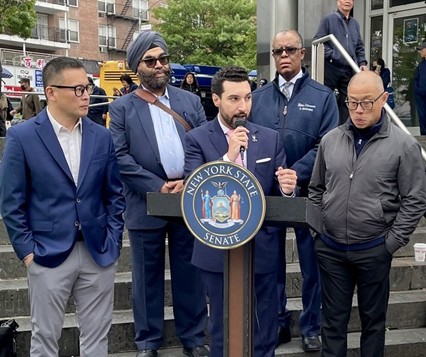
A recently passed New York State Senate bill aims to improve early detection of diabetes among Asian American and Pacific Islander (AAPI) communities by aligning insurance coverage with modern clinical screening guidelines.
The legislation, sponsored by State Senator John Liu and Assemblymember Ron Kim, requires health insurance plans to cover diabetes screening for individuals with a body mass index (BMI) of 23 or greater in populations where evidence demonstrates increased metabolic risk at lower BMI levels.
Current clinical guidelines recognize that AAPI populations develop metabolic disease, including type 2 diabetes, at lower BMI thresholds than other populations. While a BMI of 25 is traditionally used to define overweight status in the general population, a BMI of 23 is considered overweight for many AAPI patients, placing them at increased risk of diabetes and its complications.
However, insurance screening criteria have historically relied on the higher BMI threshold, creating a gap in access to early screening for at-risk patients.
MSSNY member Charles Lopresto, DO, Chair of the Legislative Committee for the Medical Society of the County of Queens and an internal medicine physician in Queens, worked with lawmakers to provide clinical context supporting the legislation.
“Type 2 diabetes can remain undiagnosed for years because many patients are asymptomatic,” said Dr. Lopresto. “By the time the disease is discovered, many individuals have already developed complications such as kidney disease, cardiovascular disease, or vision loss. Ensuring appropriate screening thresholds for at-risk populations is an important step toward prevention.”
In Queens, one of the most diverse counties in the United States and home to large AAPI communities, physicians regularly encounter patients with complications of undiagnosed diabetes.
According to the New York State Department of Health, diabetes prevalence in Queens remains significant, with more than 11 percent of adults diagnosed with the condition. Health leaders hope the legislation will help ensure earlier screening, diagnosis, and treatment for vulnerable populations.
“This legislation helps align insurance policy with the realities physicians see in clinical practice,” Dr. Lopresto said. “Ultimately, it will help prevent avoidable complications and improve health outcomes in our communities.”
Capital Update: March 20, 2026

Click to Enlarge
- Please Continue to Urge Your Legislators to Reject Problematic State Budget Proposals and Preserve Access to Skilled Physician Care
- Assembly and Senate Budget Proposals Include Some Positive Healthcare Provisions
- Statement from MSSNY President Dr. David Jakubowicz Regarding New York Being Deemed Worst State to be a Physician.

Introducing the IDR Gateway

Click to Enlarge
In the latter half of 2026, the Federal Independent Dispute Resolution (IDR) process will transition from single-use web forms to the new IDR Gateway, which will provide a secure, centralized platform that parties can use to manage disputes. IDR Gateway users will be able to:
- Start and respond to disputes.
- Access dispute dashboards and reports associated with their organization.
- Track dispute information, including disputes assigned to a certified IDR entity.
- Monitor assigned disputes by process phase.
- Review notifications regarding dispute activity.
The IDR Gateway will also bring important new security features, including identity verification processes and protocols that permit only US-based users to access the Federal IDR process.
More information about the IDR Gateway will be coming soon.


Before You Sign: Contract Mistakes Physicians Should Avoid

Click to Enlarge
- Key Point: Physician employment contracts increasingly include complex compensation formulas, restrictive covenants, and termination provisions that can affect long-term career flexibility.
- Why It Matters for New York Physicians: Early decisions around compensation structure, non-competes, and call expectations can influence income and lifestyle for years.
- Impact on Practice: Without careful review, physicians may unknowingly limit future mobility, side work, or partnership opportunities.
- MSSNY Support: Through its partnership with Resolve, MSSNY offers members access to physician-focused contract review and compensation data.
Signing a new employment contract represents more than the next step in a career. It can shape professional autonomy, income potential, and long-term flexibility for years to come. After years of training and interviews, it is understandable that many physicians feel pressure to accept an offer quickly, particularly when financial obligations such as student loan debt are part of the equation.
Yet employment agreements have grown significantly more complex as more physicians transition into employed practice models. Compensation formulas tied to RVUs or quality metrics, restrictive non-compete clauses, call expectations, intellectual property provisions, and malpractice tail coverage are now common elements of physician contracts. Decisions made during the initial contract negotiation can affect geographic mobility, compensation growth, outside consulting opportunities, and even the ability to change jobs later in a physician’s career.
Many physicians make the mistake of seeking legal or professional review too late in the process, after a letter of intent has been signed, or negotiations have already hardened. Early guidance can help physicians better understand compensation structures, evaluate risks, and identify areas where negotiation may be appropriate. Importantly, contract review is not solely about increasing salary; it is about understanding the full scope of obligations, expectations, and long-term implications.
Another common challenge is negotiating without leverage. Physicians who evaluate multiple opportunities often gain better insight into regional compensation trends, call expectations, and practice culture. Comparing offers can also help prevent decisions driven by short-term pressure, such as burnout, relocation urgency, or financial stress.
MSSNY recognizes that navigating employment agreements is increasingly complex for physicians at every stage of their careers. Through its member benefit partnership with Resolve, MSSNY helps New York physicians access trusted contract review expertise, compensation benchmarks, and negotiation insights designed specifically for physicians.
By helping physicians better understand employment agreements, MSSNY supports informed career decisions that protect both professional stability and patient care.
10 Mistakes Physicians Make Before Starting a New Job (Claussen, Resolve, 2/28).
National Forum to Address Physician Wellbeing on National Doctors’ Day

Click to Enlarge
A national virtual event—the National Physician Wellbeing Forum—will bring together leaders in medicine and wellbeing to discuss practical approaches to sustaining resilience, purpose, and fulfillment in the practice of medicine. The complimentary forum will take place Monday, March 30, 2026, from 8:30–9:30 PM ET via Zoom, and is open to healthcare professionals across the country.
The event will feature Dr. Bobby Mukkamala, President of the American Medical Association, who will share a national perspective on the physician burnout crisis and the growing institutional responsibility to prioritize clinician wellbeing. Drawing on both professional leadership and personal experience, Dr. Mukkamala will discuss how healthcare systems can help physicians rediscover meaning and joy in medical practice.


CME DAY at the 2026 MSSNY House of Delegates

Click to Enlarge
Join MLMIC & MSSNY via Zoom on Thursday, March 26th, for an engaging day of education.
7:30 am – 8:30 am: Health Equity: Acronyms vs. Culture: A Review of Healthcare History in the USA
8:40 am – 9:40 am: Veterans Matters: Suicide in Veterans
9:50 am – 10:50 am: Medical Matters: Choose Your Own Misadventure
1:00 – 2:00 pm: Assessing the Use of Artificial Intelligence in Healthcare
2:00 – 3:00 pm: The Role of Language Barriers in Medical Liability Claims


Plan Ahead—Retire Stronger

Click to Enlarge
Seeing how much income you lose in taxes? Perfect time to learn about the tax advantages of the Physician Life Income Plan, which provides tax-free growth and liquidity designed for physicians in New York.